Plants for Wildlife

Usually blue this native bugle is a good spreader with large pink spikes of spring flower. Great for drawing in the bees and covering the ground with neat, evergreen foliage. Ht 10cm

An extra robust native bugle selection. Effective evergreen groundcover for shade. Chocolate glossy lvs. Deep blue spires in April/ May 15cm. Great for wildlife and as an edging plant.

Unusual biennial sage that will seed about. Above the architectural leaves come the most glorious big flowers in shades of amethyst. Needs good drainage and a sunny spot. Flowers June July 50cm 9cm pots supplied

The true valerian makes a lovely, pure white alternative to ever- popular Verbena bonariensis. Heads of tiny flowers are a magnet to pollinators and are held on a stiffly branched skeletal structure about 1.2m high above ferny leaves. In good soil this perennial will seed about and light up dark corners. Great weaving its way between taller roses. Ht 1,5m
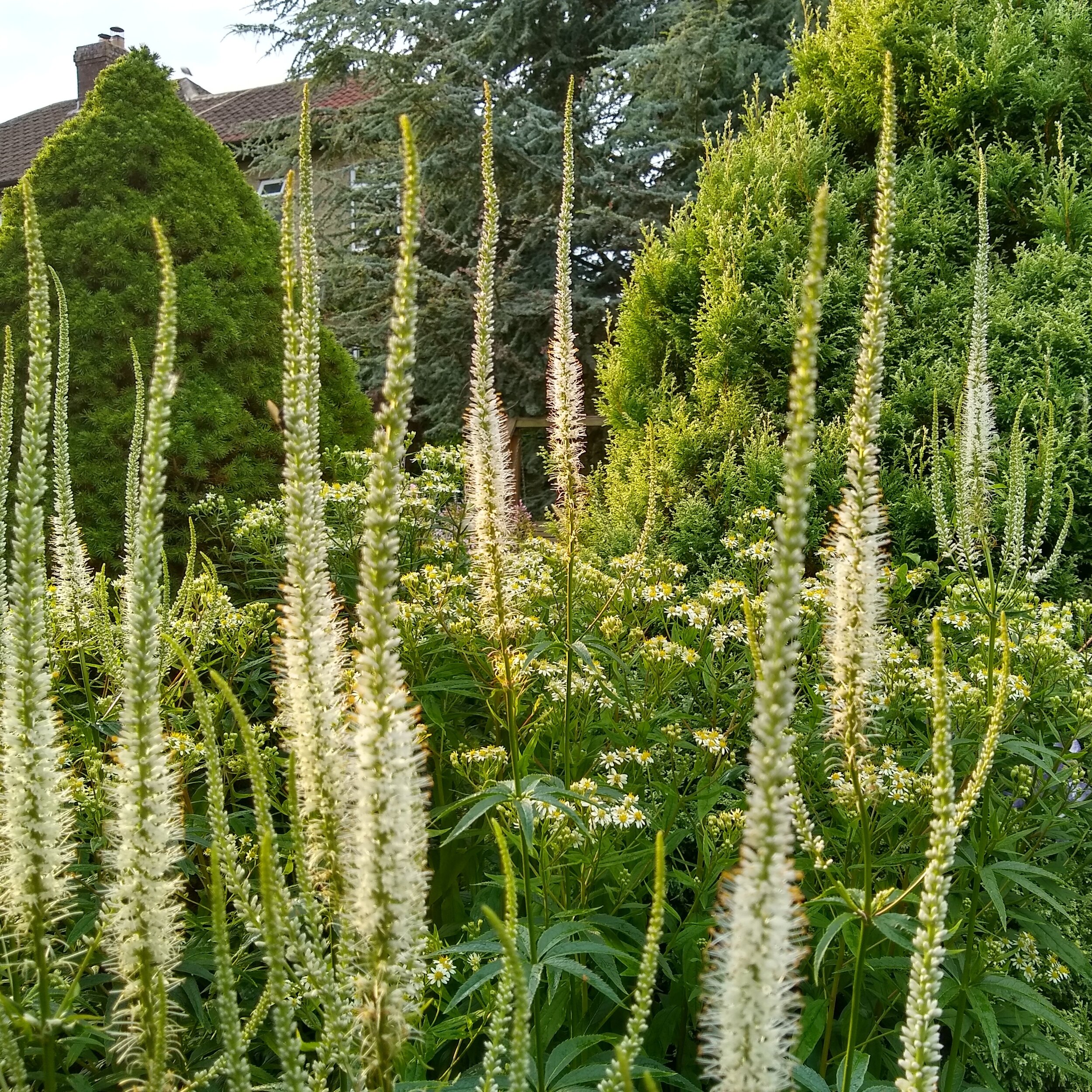
Slender spires of pure white flower appear in July and August above neat whorls of deep-green leaves. This perennial never needs staking and slowly forms substantial clumps. Ht 1.5m

Unusual and tough perennial which is good for picking. The tapering, narrow spikes in mid blue are a neat as a pin and perfect for some vertical shapes in the border instead of delphiniums. Take the flower-heads off after their first flowering in May and you get a drawn-out reblooming through summer. Will gently seed about in good soil. 1.2m Sun
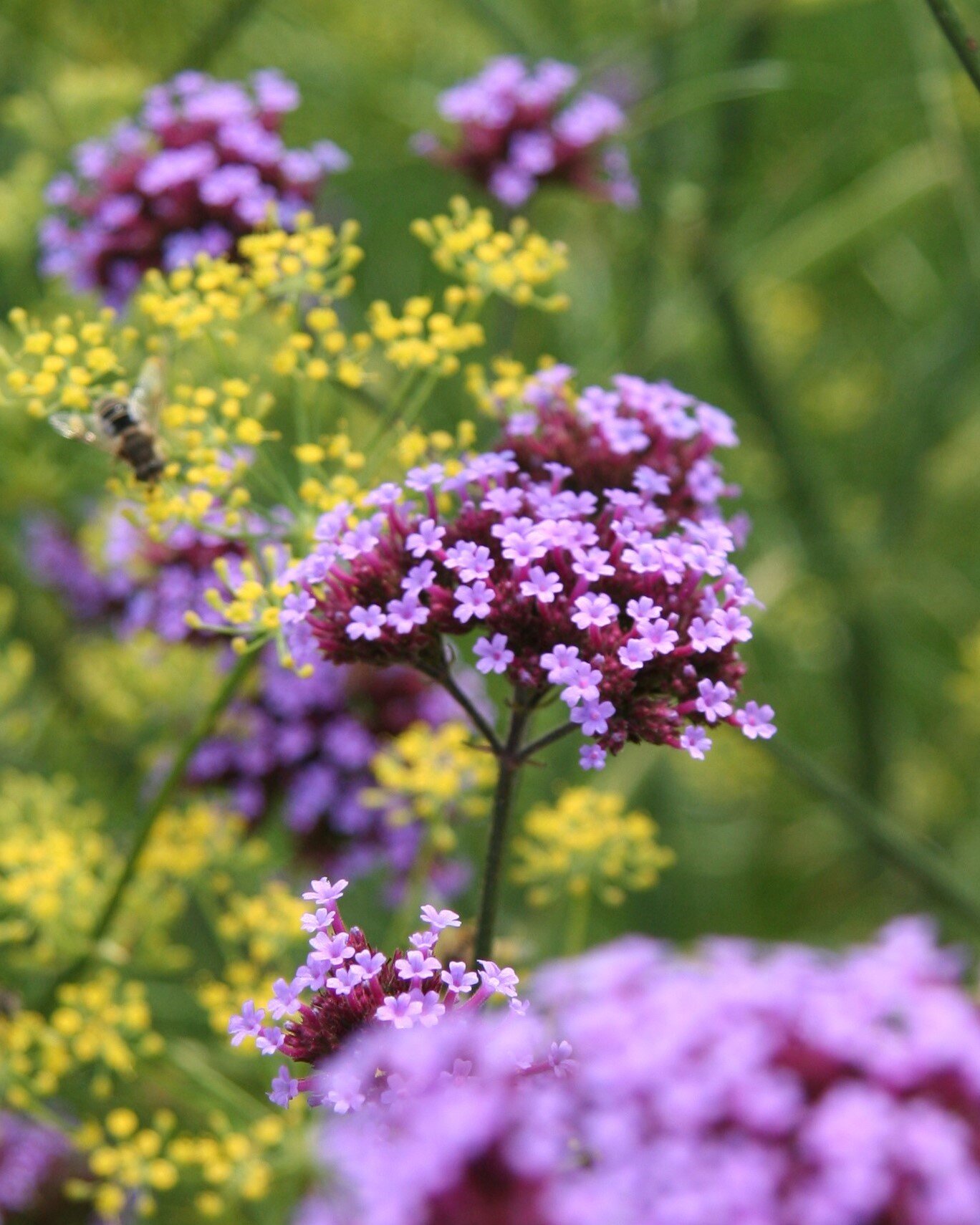
The classic tall and airy plant for summer. Ever popular, both for its long flowering over several months and as a wildlife mecca that buzzes with bees and butterflies. Mauve flowers in clusters appear from July to October and in the sunny places it loves this will seed about but never become a nuisance. Perennial in the South-West 1.4m

A long-lived perennial providing elegant vertical interest with spires cloaked in yellow or white flowers with a rose pink centre in July- Aug. Cut to the ground for a repeat performance in the autumn or leave for attractive seedpods and plenty of seedlings. Prefers lighter soils and sun 1.4m

Native wildflower that paints verges and grassland in magenta purple through high summer but does equally well gently seeding itself through garden borders. A tidy perennial plant 30cm

Unusual betony with large and showy dense spikes of hooded mauve purple flowers like a giant dead-nettle in May above a mound of tidy, scalloped foliage. From Turkey. Easy care and good as groundcover under shrubs and roses. Ht 40cm

This is a hybrid form of our native Betony. Very neat and upright in the garden the summer spikes are a magnet for bees and make lovely seed heads all through winter. Flowers July -Aug 30cm

Perennial Campion Choice, lacy white campion perfect in those difficult dry and shady areas such as at the base of trees. In May and June clumps are covered with the delicate fringed flowers and attractive seed pods follow on 60cm

The strongest and most popular sedum with the best winter seedheads. This is the one your granny grew - smothered in late summer with butterflies. The pinky red blooms - rather like broccoli, are held above neat apple-green succulent foliage 35cm (Now annoyingly renamed Hylotelephium Herbstfreude)
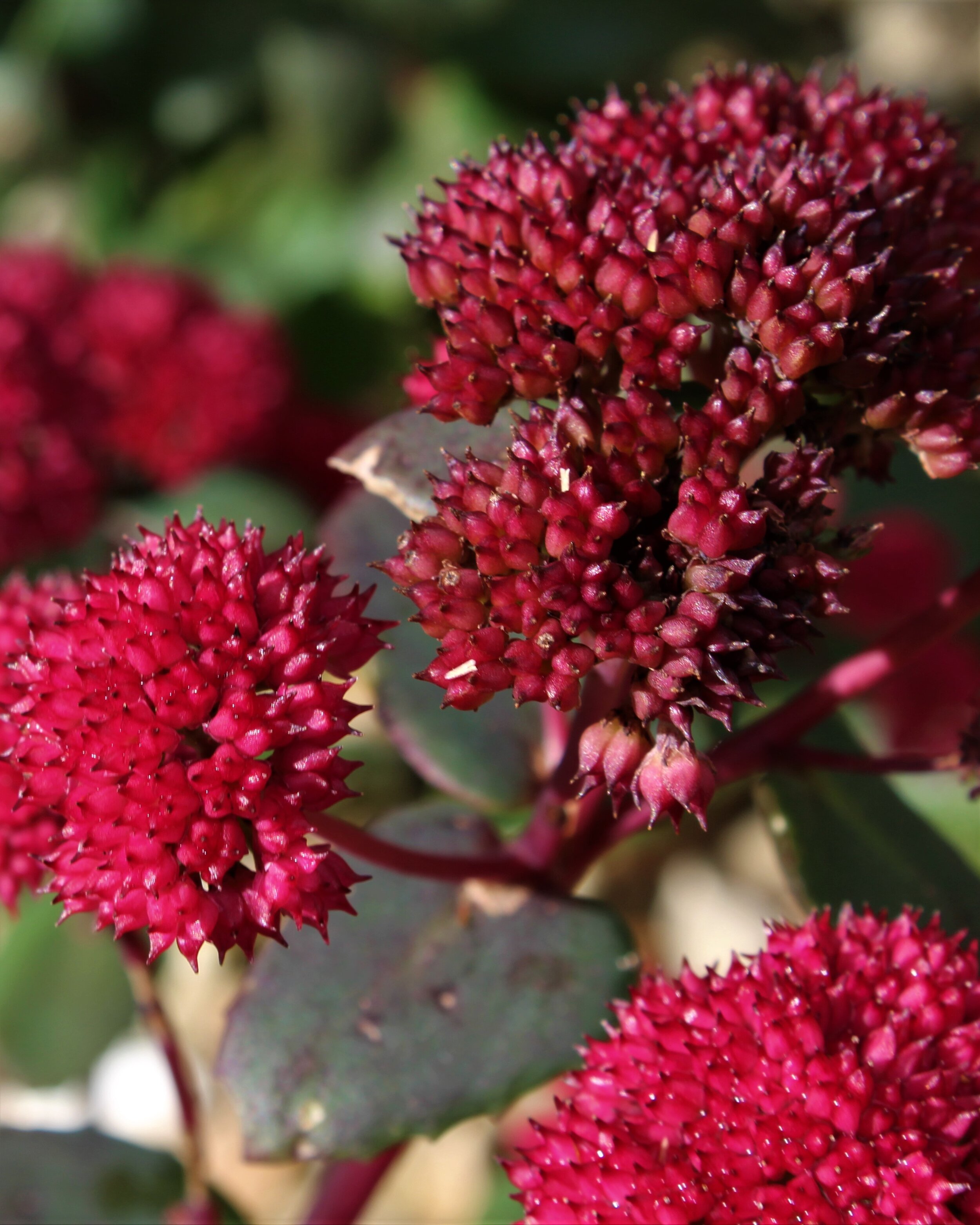
Steals the show in September with the reddest flowers of all sedums – smallish heads and grey leaves. Cut back by half in May to avoid staking later on Ht 40 cm. Full sun and good drainage.
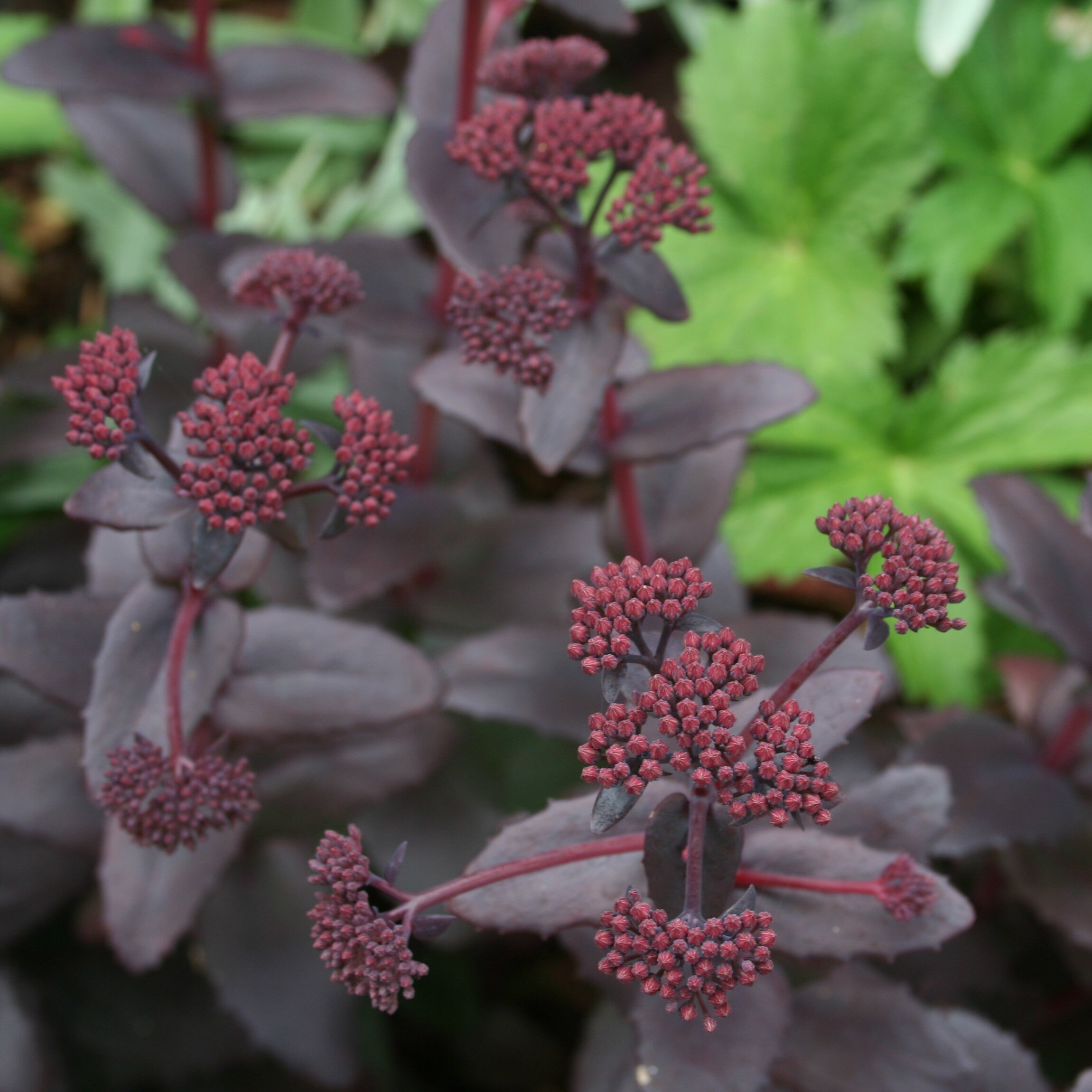
The best of the dark purple-leaved sedums. This perennial really stands out in the border with its rosy red flowers through September set above dark purple leaves followed by decent winter seed heads too. 30cm 9cm Pots

The biggest sedum at 40cm. Lovely pewter- tinged leaves and soft pink flowers Sep-Oct 40cm. Great foliage all summer and then the butterflies get busy in Autumn. Like all sedums, very drought tolerant and sun-loving. Ht 40 cm

One of the best hardy salvias partly for its longevity of flowering and unusual colour. A great bee plant if you keep deadheading you will have masses of purple spikes from June to November. Protect new shoots in spring from slugs. Ht 40cm by Width 50cm Full sun and good drainage.
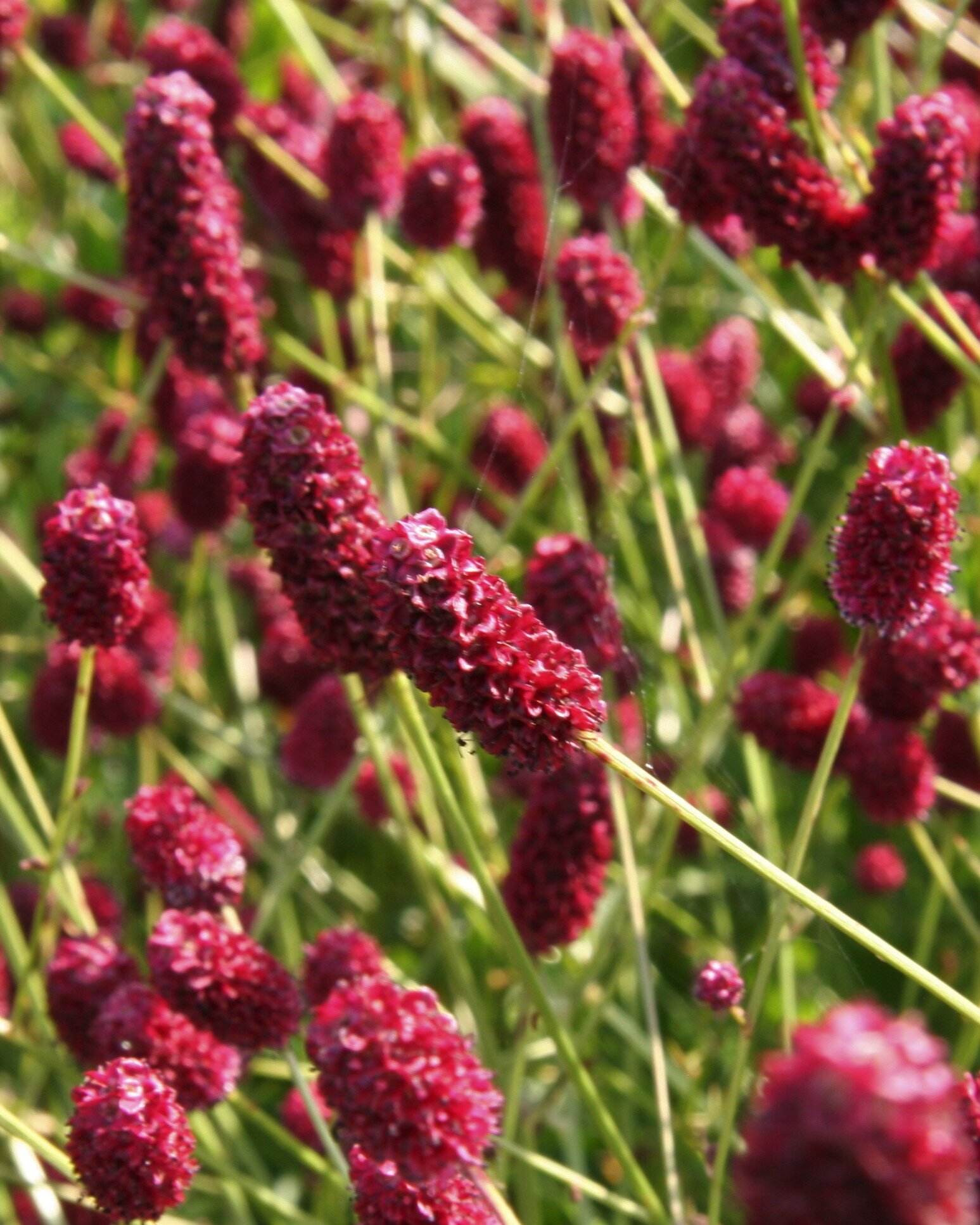
Native sanguisorbas (or Burnets) have become very desirable with garden designers - valued for their architectural presence, neat habits and ease of growth. The unusual flowers blend well with grasses in naturalistic schemes and remain to decorate the winter garden. Neat, ferny foliage is a bonus. Avoid dry soils. July - Sep 25cm

This is my favourite pink shrubby salvia. The individual flowers are large for a sage with a silvery hue that really shimmers and sings in the border. As with all the shrubby sages - hardy - long flowering and easy plus deer and rabbit resistant. 40cm Jul-Nov

A favourite shrubby salvia with among the largest lipstick pink flowers of its type which go on for months through high summer till the first frosts. Shrubs get about 40cm high. Trim them lightly in April to keep them looking neat. Hardy and reliable but a bit brittle and delicate if you have large dogs or kids footballs flying about! Nice complement to the larger blooms of roses or dahlias.

Classic garden designer plant which delivers so much. The leaves are neat and attractive and the show of bold cheerful gold daisies continue for months in late summer just as the garden is flagging. Reliable and easy but needs plenty of water and good soil in dry summers to perform best. Seed heads look good too in winter 30cm Jul - Oct

All-time favourite native plant. Dainty, good for pollinators and flowers for ages early in the season when there is little to enjoy in the garden. Primroses love thin grass in sun or seeding about under roses and shrubs - dotting themselves among cracks in paving. Goes beautifully with purple crocuses, violets or forget-me-nots. 10cm

When you see a meadow thick with these native wildflowers you will want to welcome them into your borders where they can gently seed about. They like a bit of sunshine and are valuable spring nectar plants for wildlife. 15cm

Vigorous ground covering carpet with masses of pink globular flowers in May - June. Lovely trailing over a wall or path edges. Ht 10cm Cut back hard in spring. Sunny site and good drainage.

Jerusalem sage is a tough but sumptuous groundcover plant with bold - almost evergreen mats of foliage from which rise yellow whorls of flower in pom-poms up the stem in June. Great seedheads last well through winter. Ht 40cm. spread 1m +

The architectural soft-pink drumsticks of this native plant are an unusual shape when they flower in May and June making a great contrast to tulips and alliums. This plant likes average to damp soils and will spread about making good groundcover in sun/shade 30cm.

One of my favourite groundcovers - it rapidly spreads sideways - over ugly drain covers and down walls before covering itself in pretty spikes of flower which start white - fade to pink before darken to red which creates a lovely multi-coloured effect for months from June to October. In winter the leaves turn deep brown. 20cm - spread 1m +
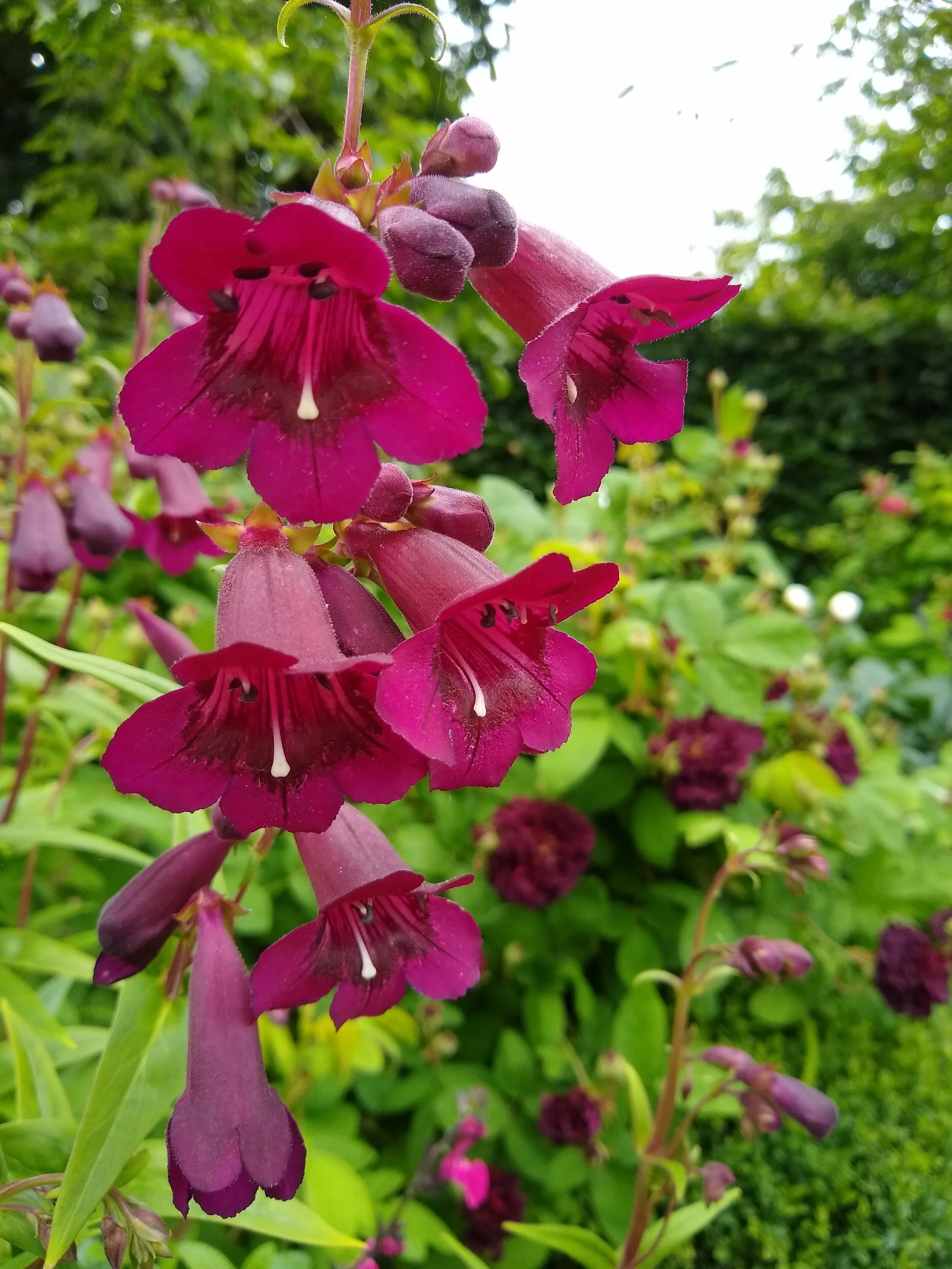
A lovely deep violet colour. No garden should be without a penstemon because they flower for a long time and make useful mounds of evergreen leaves through winter. 50cm
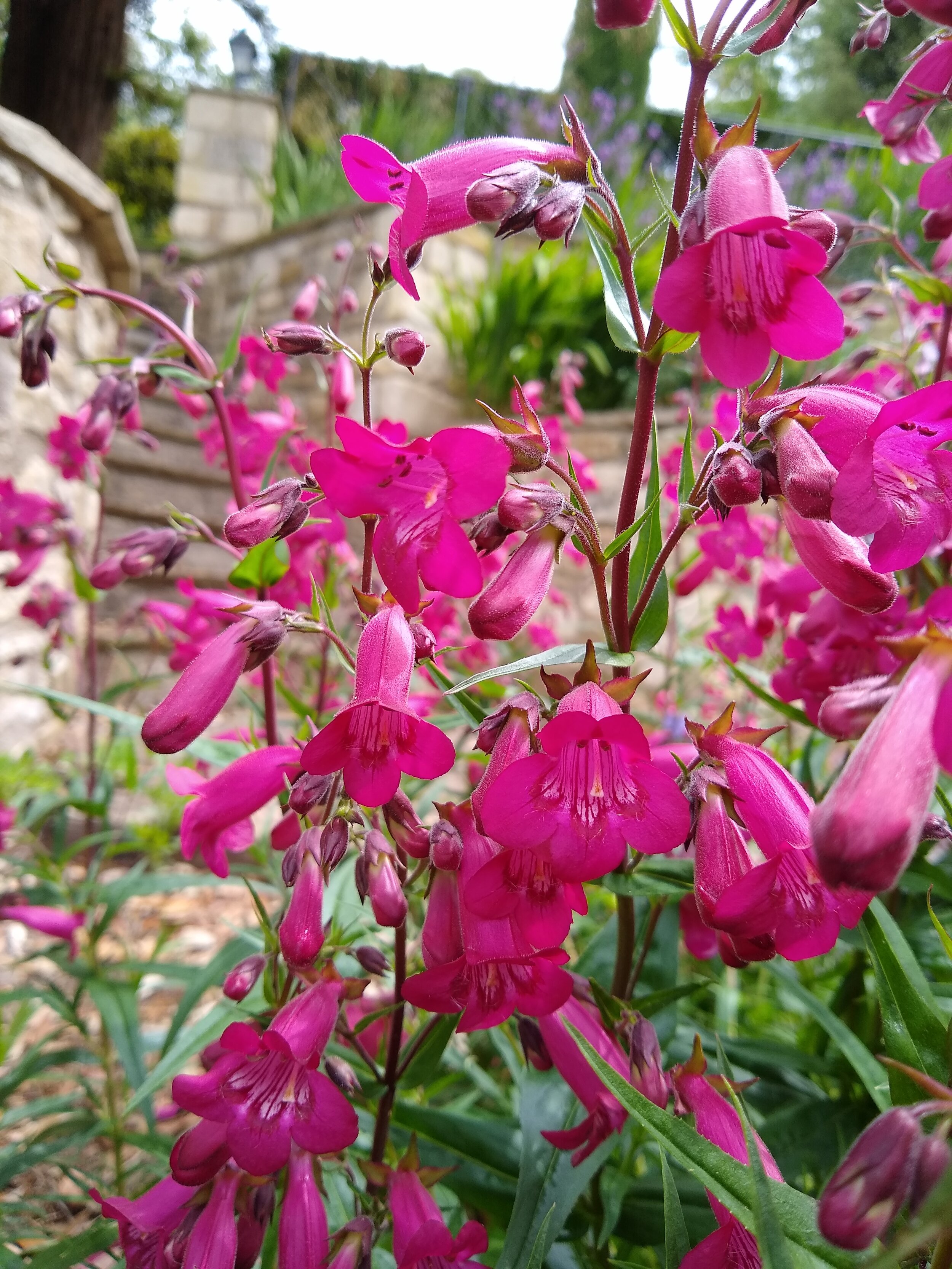
This is the hardiest and easiest penstemon to grow with a generous show of raspberry pink bells all summer and willowy leaves which stay evergreen through winter. Cut back hard each spring 40cm
Dusty Miller. No other plant looks like this. Ghostly skeletal, upright structure above a rosette of evergreen grey furry leaves. This is a short-lived perennial for sun and good drainage but it will seed about generously and is long flowering - effective in gravel areas. Carmine flwrs June – Jul. Ht 40cm