Hot Colours

Above neat, iris-like leaves, the slender spires of starry, lemon-yellow give a unique look to the border in June and July. This is a short-lived plant which likes well drained places and will seed about and pop up in unexpected places in sun or light shade 40cm
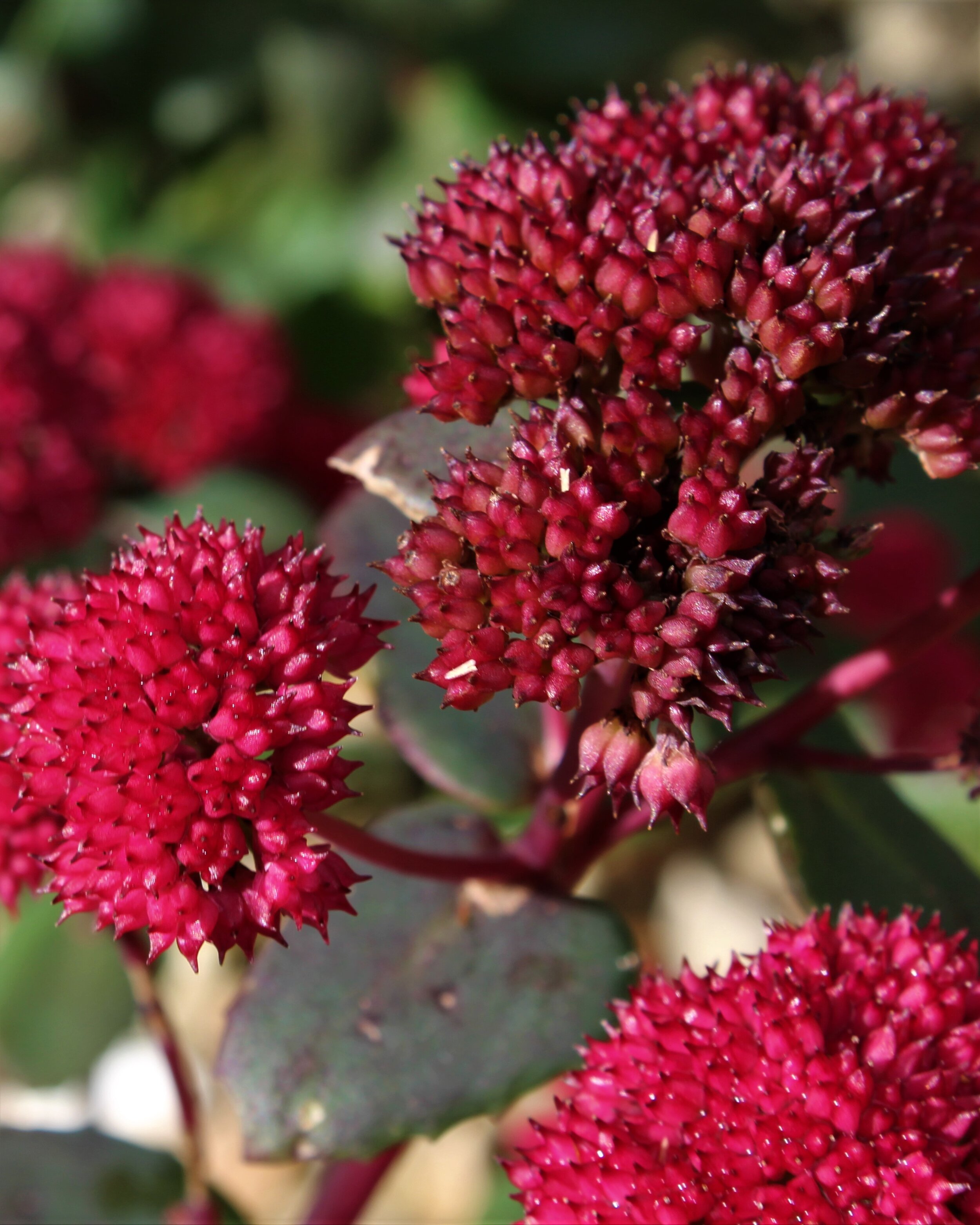
Steals the show in September with the reddest flowers of all sedums – smallish heads and grey leaves. Cut back by half in May to avoid staking later on Ht 40 cm. Full sun and good drainage.
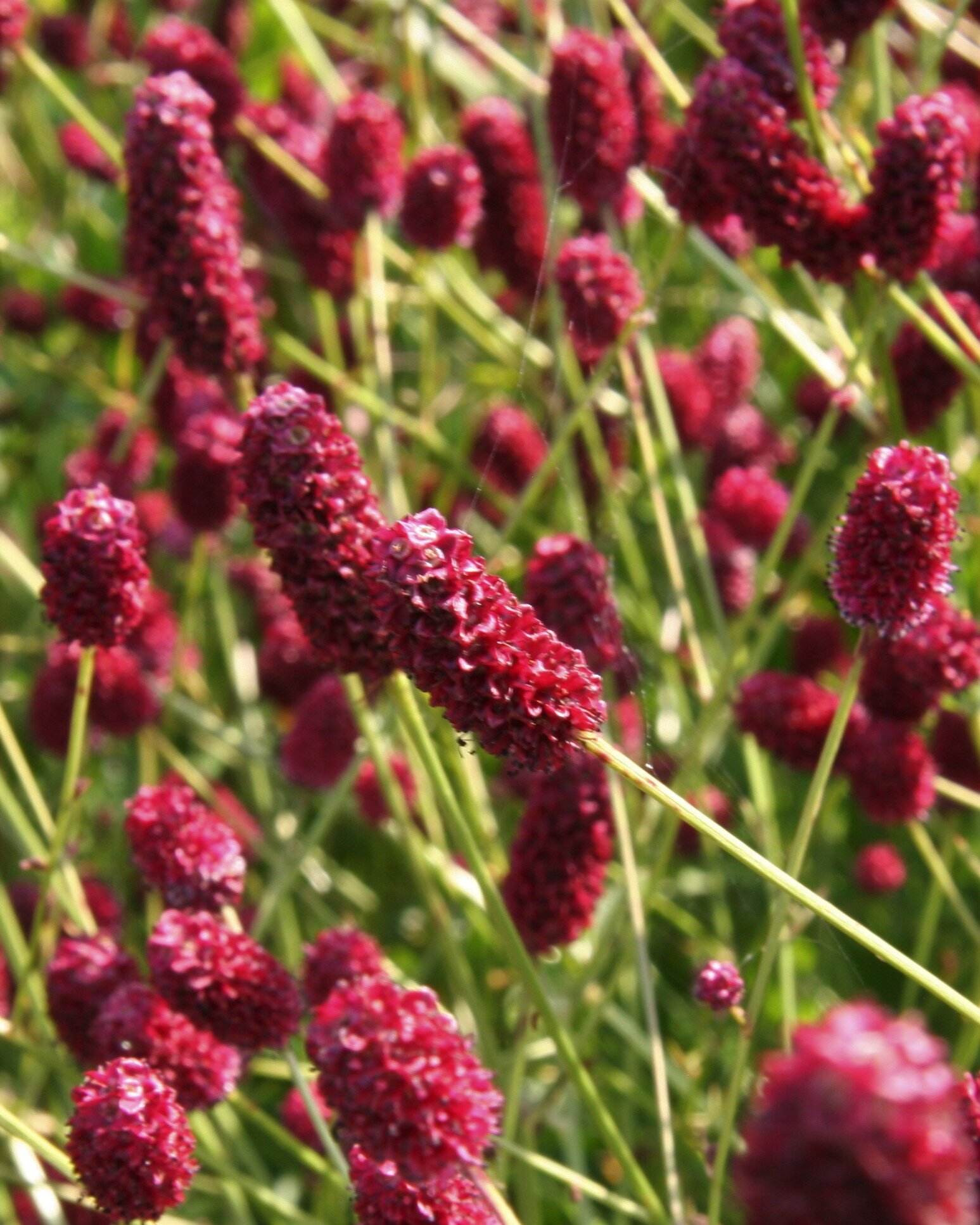
Native sanguisorbas (or Burnets) have become very desirable with garden designers - valued for their architectural presence, neat habits and ease of growth. The unusual flowers blend well with grasses in naturalistic schemes and remain to decorate the winter garden. Neat, ferny foliage is a bonus. Avoid dry soils. July - Sep 25cm

Classic garden designer plant which delivers so much. The leaves are neat and attractive and the show of bold cheerful gold daisies continue for months in late summer just as the garden is flagging. Reliable and easy but needs plenty of water and good soil in dry summers to perform best. Seed heads look good too in winter 30cm Jul - Oct

All-time favourite native plant. Dainty, good for pollinators and flowers for ages early in the season when there is little to enjoy in the garden. Primroses love thin grass in sun or seeding about under roses and shrubs - dotting themselves among cracks in paving. Goes beautifully with purple crocuses, violets or forget-me-nots. 10cm

When you see a meadow thick with these native wildflowers you will want to welcome them into your borders where they can gently seed about. They like a bit of sunshine and are valuable spring nectar plants for wildlife. 15cm
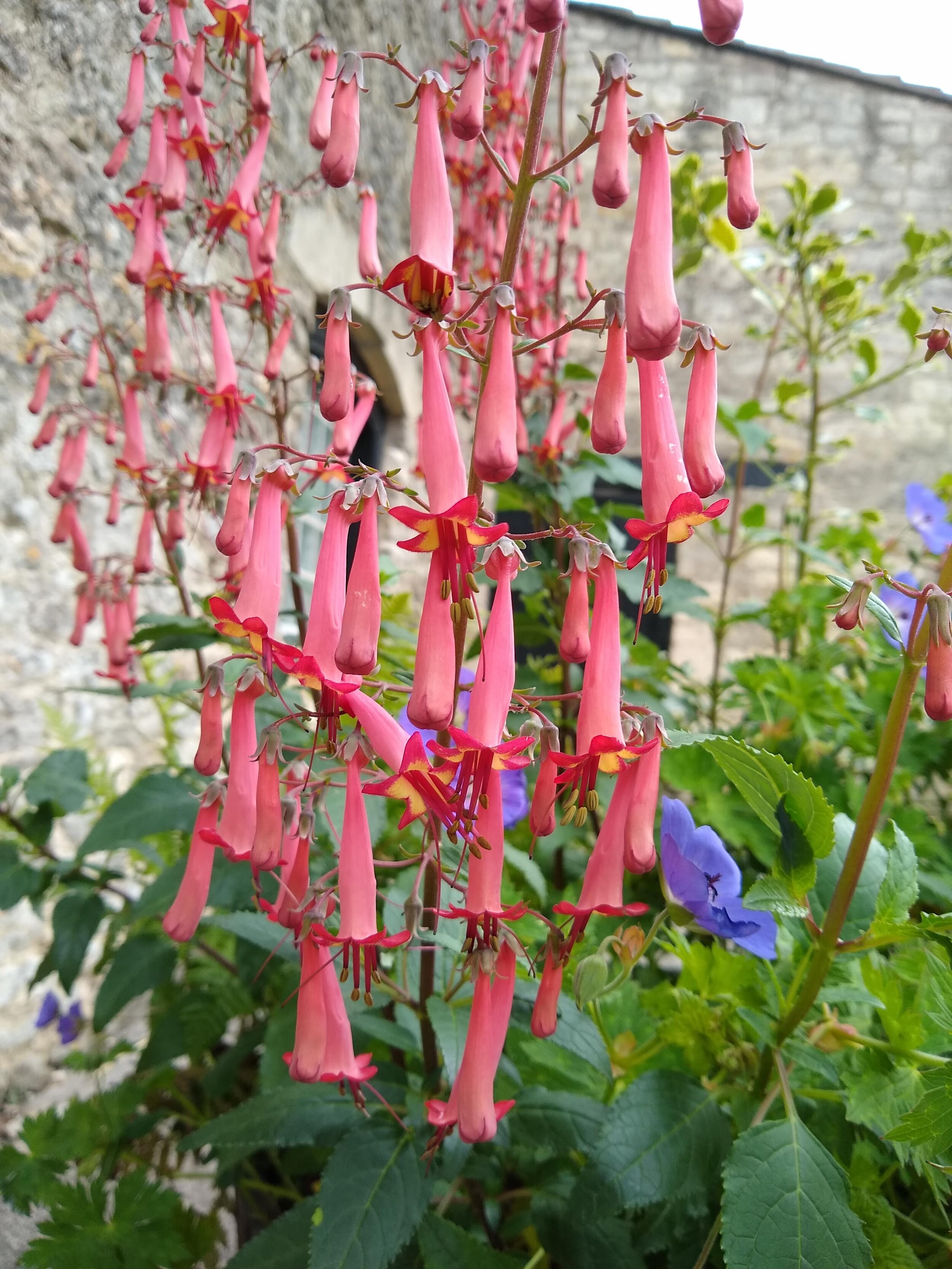
Cape Fuchsia. Unusual sub-shrub which dies down in winter with huge panicles of long dusky red bells each with a lemon yellow lip. Flowers for a long time June - August. Ht 50cm

Jerusalem sage is a tough but sumptuous groundcover plant with bold - almost evergreen mats of foliage from which rise yellow whorls of flower in pom-poms up the stem in June. Great seedheads last well through winter. Ht 40cm. spread 1m +

Japanese Black Mondo Grass makes neat little clumps of shining dark foliage. A perfect foil for small cyclamen and miniature bulbs such as snowdrops and crocus. Good in sun or shade to edge borders and paths. Evergreen and easy. Ht 10cm

The bergamots are aromatic perennials traditionally used to make herbal teas but worth growing for their showy, crown-like flowers in July- August. In this form flowers are stunning deep red - a great bee plant Monardas don’t need staking but protect from slugs in spring and give them plenty of water in dry summers. They prefer rich - heavy soils - sun or shade 40cm.

Plume poppy. A great stately foliage plant with bold blue-grey leaves and subtle tawny panicles of flower that catch the evening sun. Tends to spread rapidly so good in wilder places or confined spaces. Ht 2m.

A new twist on the tough old cottage garden favourite. The same cheerful spikes of neat flowers in June but beautiful creamy variegations in this cultivar which have pinky tinges as they sprout in spring. Not invasive like the original form. No staking required. Ht 40cm
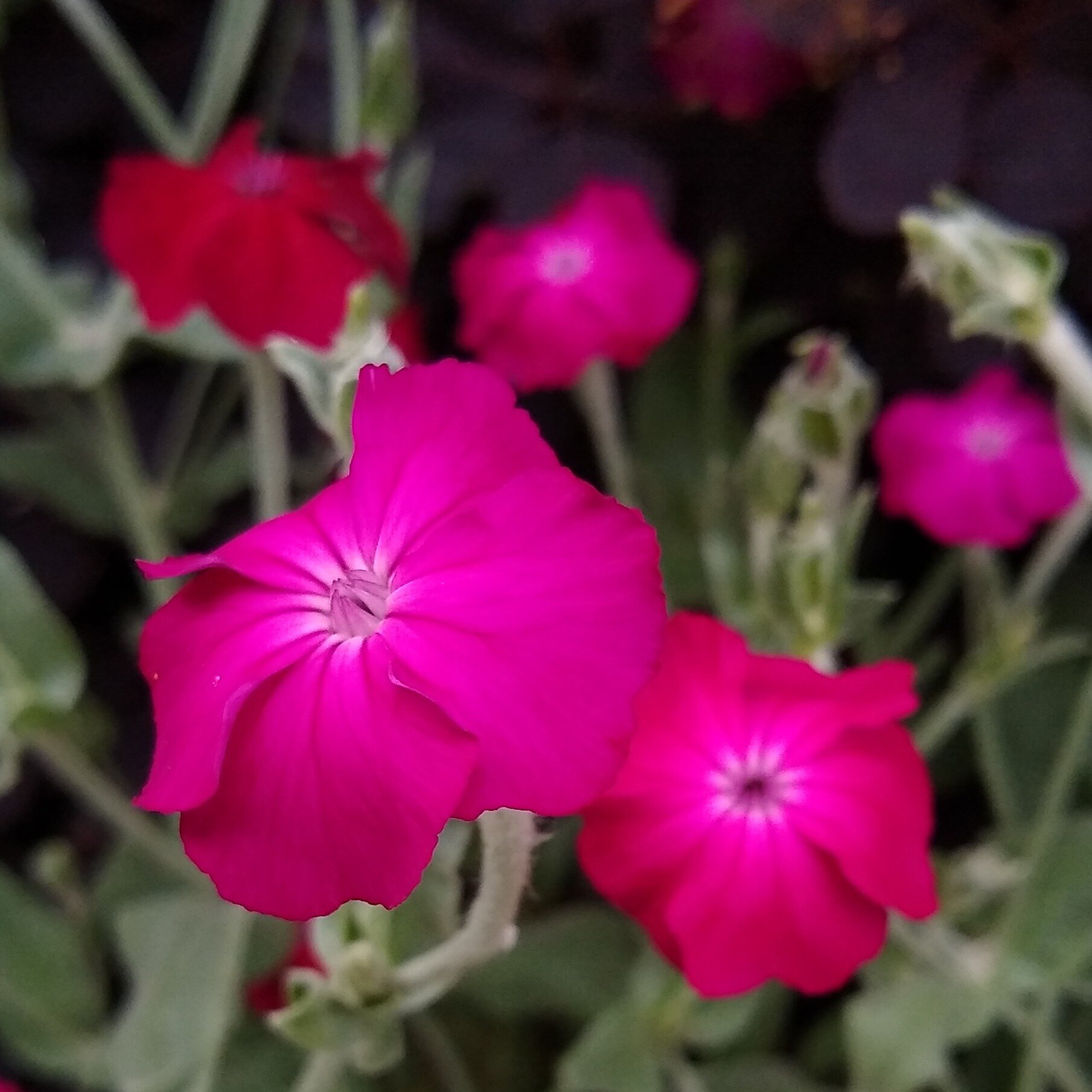
Dusty Miller. No other plant looks like this. Ghostly skeletal, upright structure above a rosette of evergreen grey furry leaves. This is a short-lived perennial for sun and good drainage but it will seed about generously and is long flowering - effective in gravel areas. Carmine flwrs June – Jul. Ht 40cm

Macedonian scabious will bring in beneficial insects as well as looking fabulous with its brooding burgundy flowers. Deadhead regularly and those pincushions will keep coming for months. A reliable addition to the flower border and a fashionable colour. Ht 40cm Slowly self seeds.
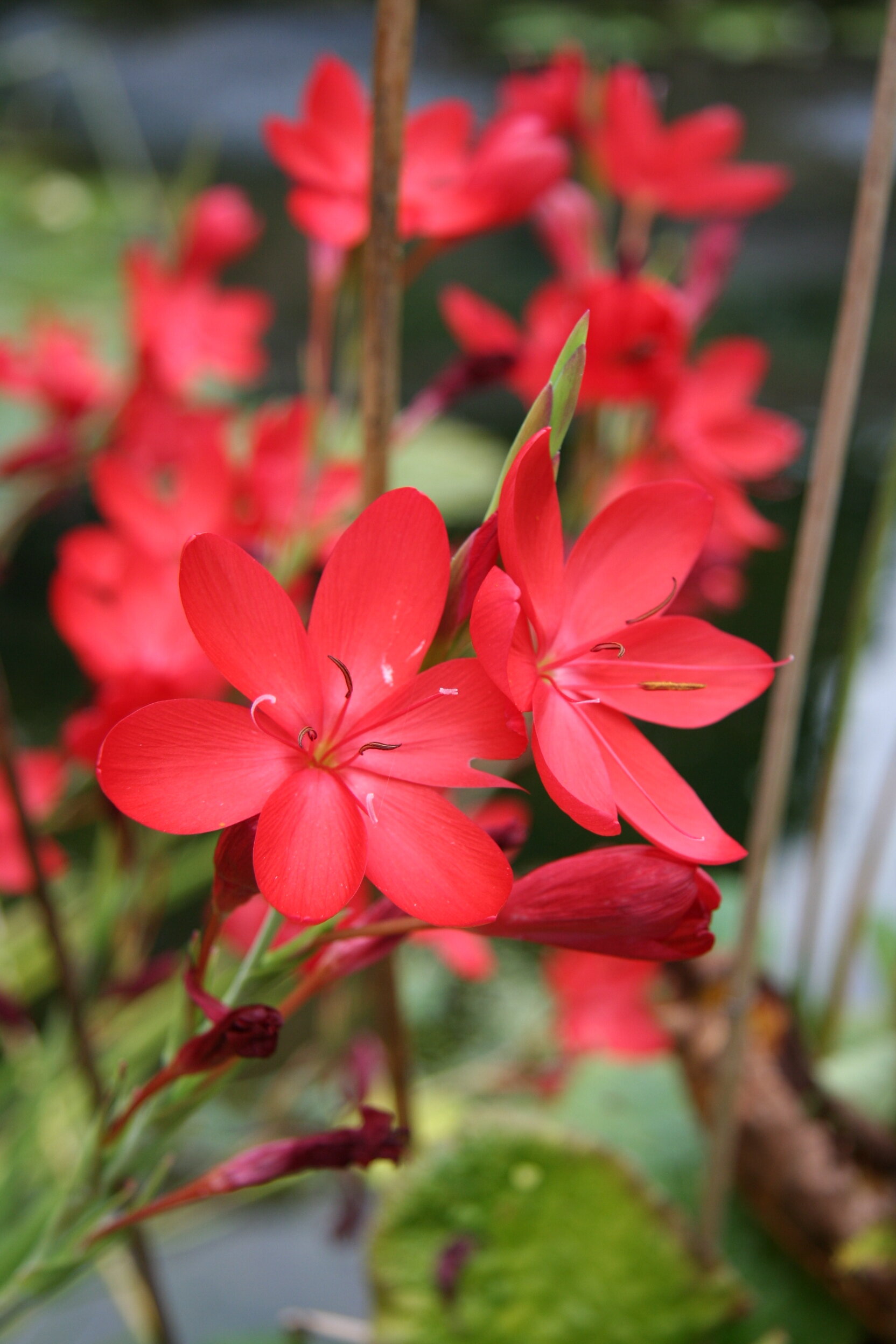
River lily (Formally Schizostylis) This South African bulb is unusual in flowering late in the year and tolerating moist soils. Like an elegant , dwarf gladioli, each cluster of blooms is perfect for picking. Easy in a rich soil and avoid dry places - this bulb will even grow happily in wet soils. 25cm
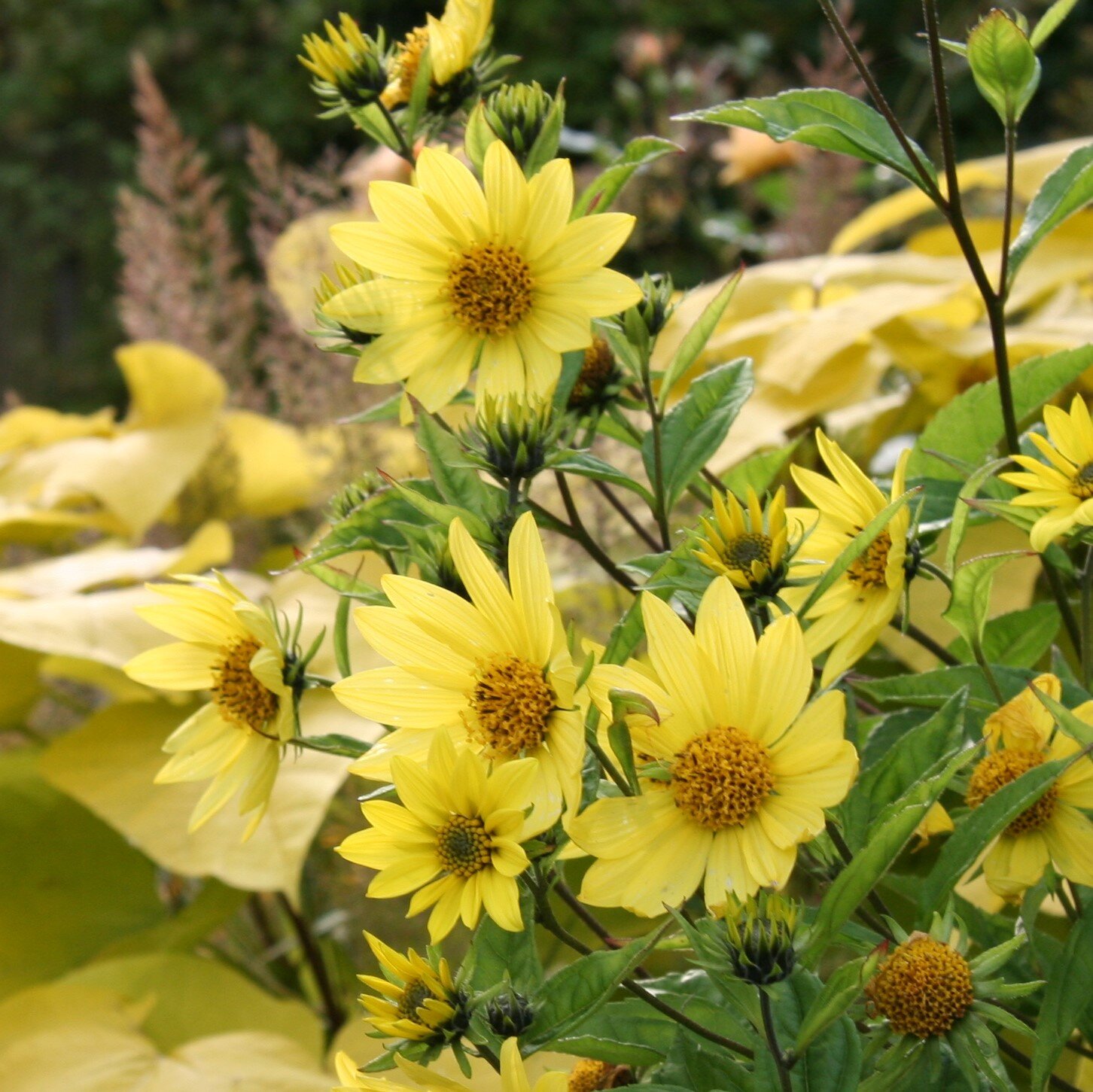
Tall and robust perennial sunflower. Long flowering sprays of dainty lemon daisies are beloved by bees all through July to September. Needs no staking at 2m Best in sun.
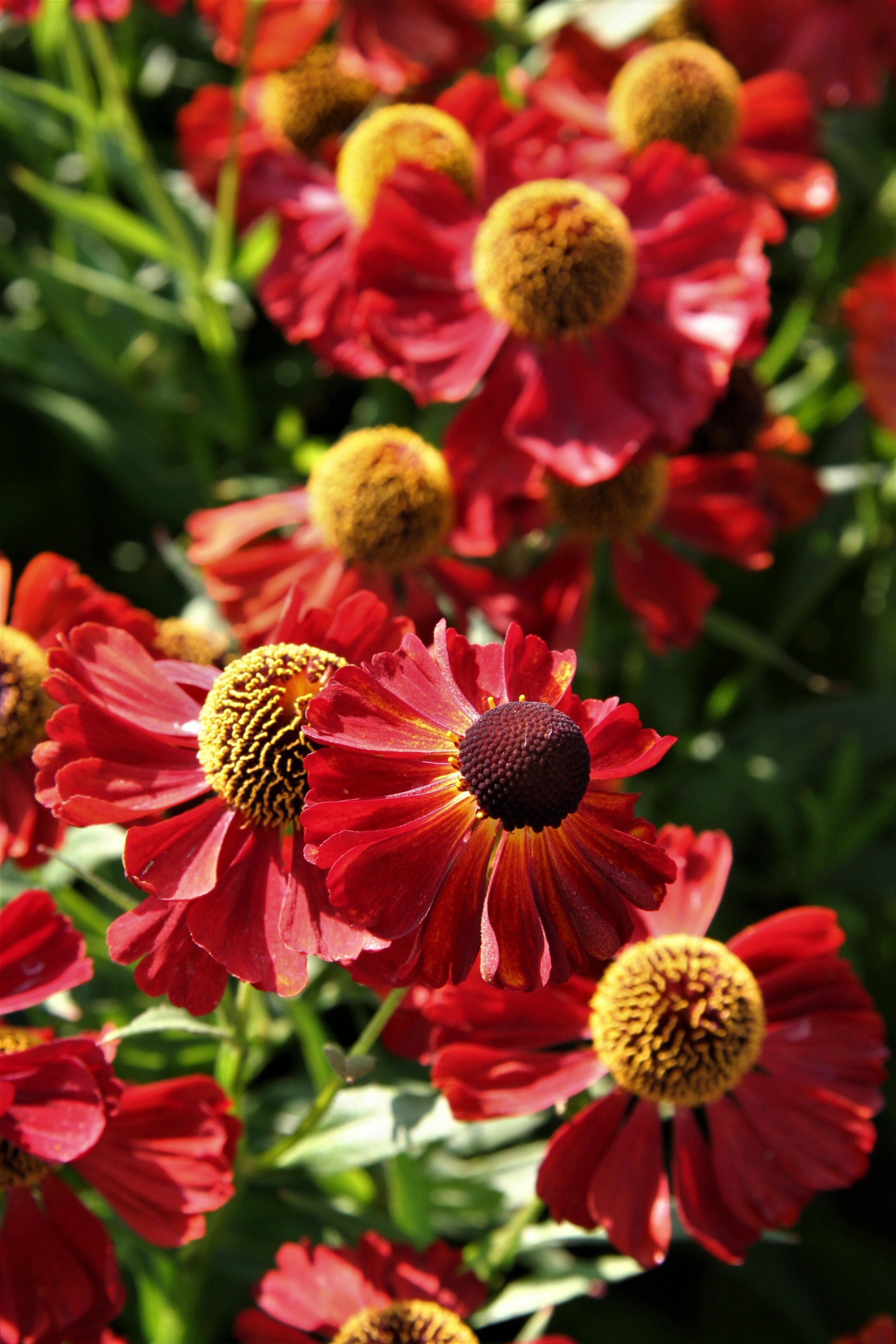
This is a tall sneezewort which needs a few bamboo canes to keep it upright but it's great for picking and wildlife and I love that dark mahogany colour. An easy and long-flowering stalwart of late Summer - easily divided up in spring if you want to make more. 1.5m

Coppery orange daisies in many shades are a magnet for insects in June and July -deadheading keeps the show going. Well - behaved it prefers full sun and a little staking. Ht. 1m

A mini waterfall of golden tresses make this compact little Japanese grass a stunner in both the border or as a feature container plant. No flowers as such but great foliage all year - even in winter when the leaves take on a parchment colour for months. Ht 20cm Spread 60cm.

Attractive, tough herb and great wildlife plant. Dainty mauve clouds of flower in summer 20cm sun. Cut back after flowering to enjoy the mat of golden leaves all winter and spring. Lovely scent. For sun and good drainage. Ht.25cm

A magical combination of architecture and elegance. This is a tall but see-through plant beloved by bees and beneficial insects and making lovely silhouettes in the garden through winter. Seeds about in light soils. Superb with Verbena bonariensis. Full sun. Ht 1.8m
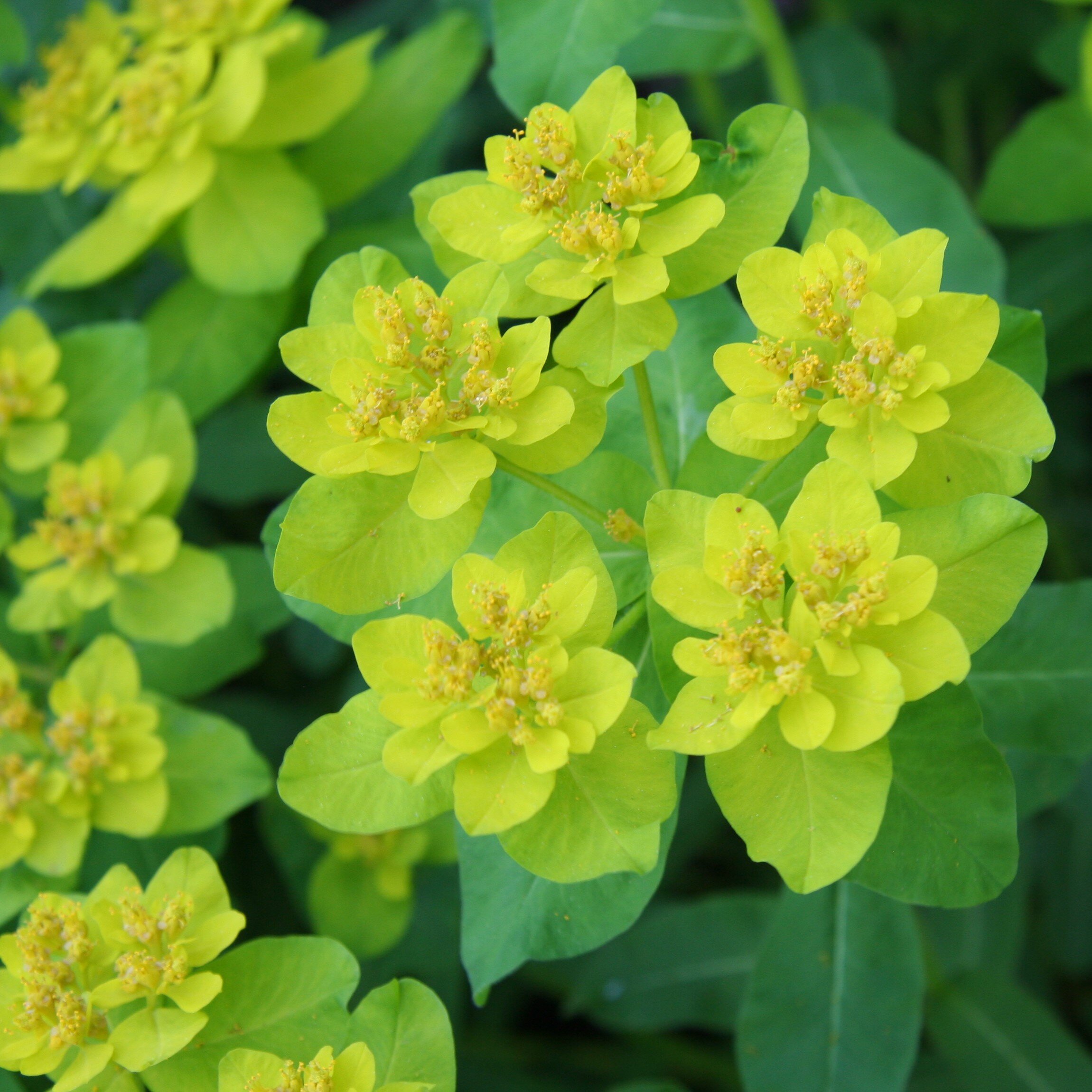
Essential plant for flower arranging. The lime green bracts shine out through any border bringing all the colours to life. Though a short-lived plant this loves to seed about and mingle. Trim back after flowering and it will give a second performance all summer long. Great value and the perfect mixer to give a border sparkle Ht. 30cm (9cm pots supplied)

This is the only true orange spurge. Bracts last for ages in spring appearing atop plum purple foliage which turns green in summer but looks tidy right through the growing season. Dies down in winter . Likes a heavy soil. Spreads moderately by underground rhizomes Ht 1m.

Euphorbias are handsome evergreens with architectural foliage and huge spring panicles of lime green flowers when little else is looking interesting. This species needs full sun, good drainage and plenty of space as it gets up to 1m high by the same across. Gently seeds about in time. The milky sap is a skin and eye irritant so handle with care when removing the spent flowerheads in spring. Ht 1m
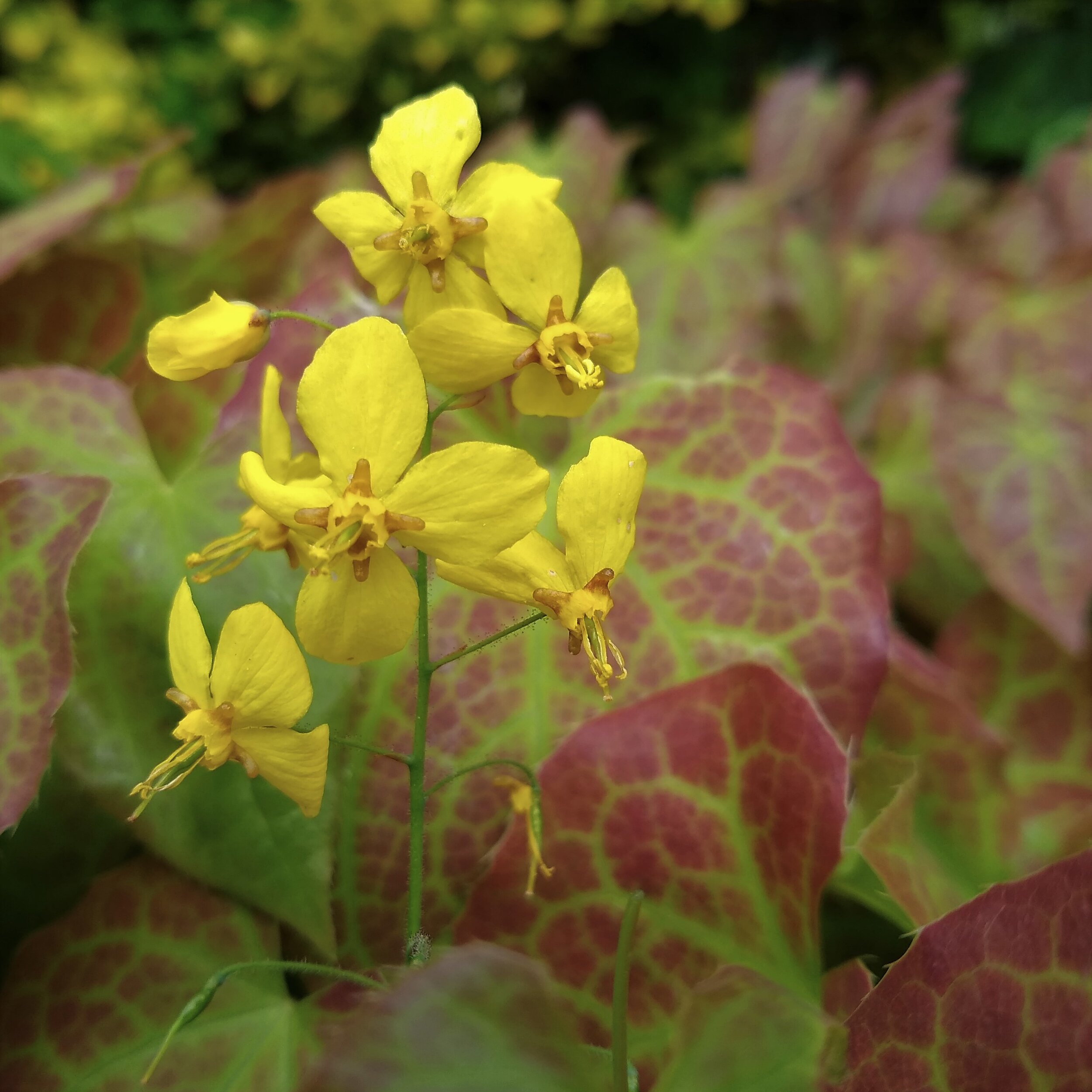
Easy good looking evergreen groundcover. The glossy leaves often turn purple in winter but it’s best to trim away last years foliage by March to make way for dainty little clouds of pale orange star-like flowers in April. Good in dry shade where it makes dainty carpets. 20cm

Leopard's Bane. Underrated and unusual daisy which flowers very early making a great accompaniment to tulips. Surprisingly good in part shade. Leaves melt away by high summer but this is a reliable perennial that will return every year making a slowly spreading clump, well-frequented by early bees. Flowers April - May 40cm

Water saxifrage. A bold statement for heavy soils or waterside planting. The huge, rounded leaves (40cm across) make a small-garden alternative to giant rhubarb and turn rich red colours in Autumn. In Spring, large heads of pink flowers rise from the bare earth. A tough - dramatic plant. 80cm

An iconic summer stalwart. From dramatic swords of leaf arise horizontal sprays of scarlet red trumpets lasting about 3 weeks in June. The seed heads that follow are equally attractive. This is a bold plant which benefits from some robust support. A show stopper at 1.2m. Full sun and good soil.

Amber yellow form of the ever tough and popular montbretia. Nice weeping habit - flowers look good with summer Aster Monch and ferns. Flowers July - August. Ht 40cm
A long-lived perennial providing elegant vertical interest with spires cloaked in yellow or white flowers with a rose pink centre in July- Aug. Cut to the ground for a repeat performance in the autumn or leave for attractive seedpods and plenty of seedlings. Prefers lighter soils and sun 1.4m